Good assignment feedback should make your next revision clearer, not leave you guessing what to change. The best assignment feedback services for Australian students vary in scope, from tracked edits on a draft you wrote to hands-on thesis coaching. Here are six named options and the kind of work each suits.
1. CHETAVON
CHETAVON provides human academic editing, proofreading, feedback, and coaching through its academic and assessment support for work you wrote. It’s a fit if you want a person to comment on your draft while you keep control of every change and the final submission.
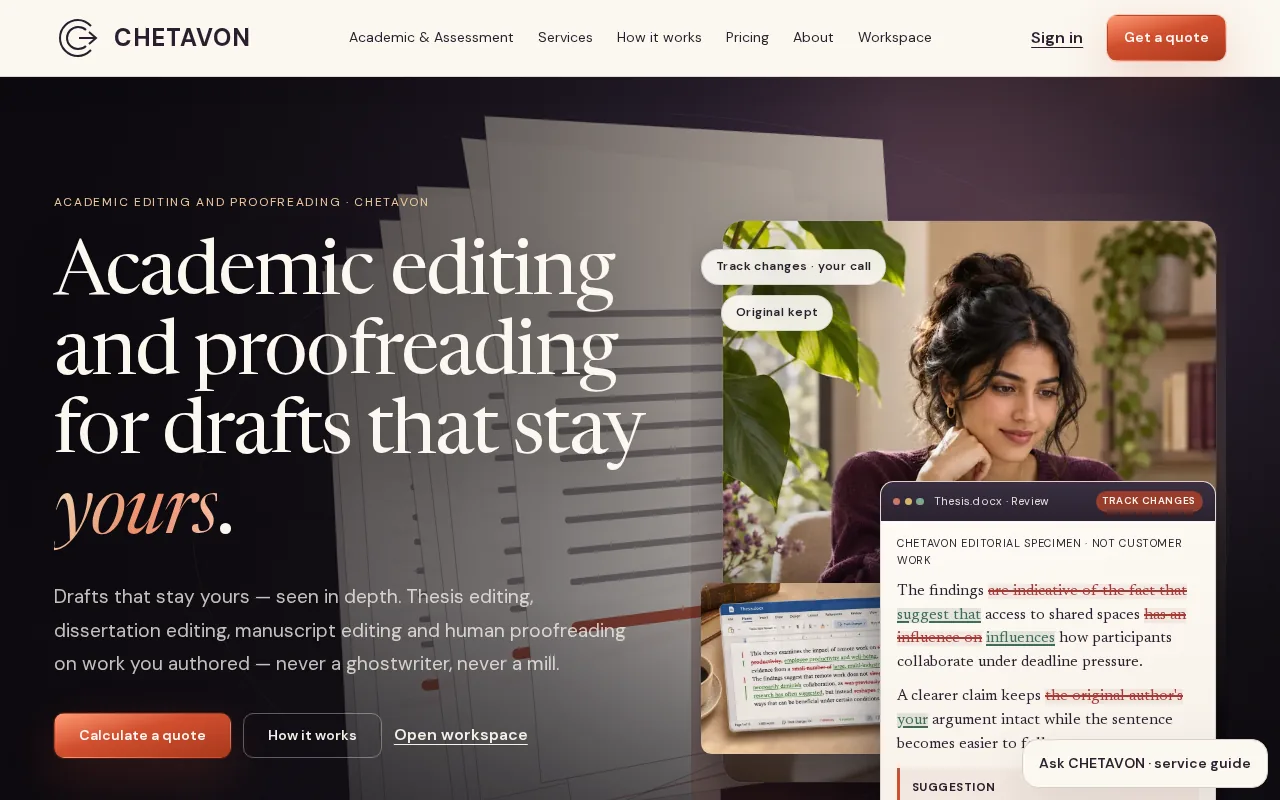
For an assignment, that can mean comments against your brief, questions about a claim, or edits that make a sentence easier to follow. For example, an editor might flag a paragraph where the evidence is clear but the link to your main point needs work. The editor’s role is to help you revise, not to write the assignment or choose your argument.
The service says it will not write assignments or breach third-party editing policies. That boundary matters if your school or university has rules about outside editing. Academic integrity guidance also treats authorship and proper attribution as key concerns; check the overview of academic integrity alongside your institution’s own policy.
If you want feedback tied to your instructions, CHETAVON’s assignment feedback against your brief is the relevant service page. It’s designed for questions and comments on your draft, rather than a rewrite or a grade.
For closer sentence-level help, choose assignment editing; for questions about structure or revision, choose feedback or academic coaching. CHETAVON also has separate editing levels for work you authored. The central point is simple: your meaning, sources, and final decisions stay yours.
2. Grad Coach: Hands-on thesis and dissertation support
Grad Coach provides thesis and dissertation help from doctoral-qualified experts. Its listed support includes coaching, editing, transcription, and data coding. It may suit you if a large research project needs more than a final proofread, especially when you want guidance across different parts of the work.

Coaching is different from proofreading. A proofreader checks the text for errors. A coach can help you think through your research plan or decide what to revise next. Transcription and data coding are also named parts of its support, so the scope can reach beyond language editing.
Before you begin, write down what you need help with. Is the issue a tangled argument, a chapter that needs editing, or data that needs coding? A clear request helps you discuss the right type of support during the free consultation Grad Coach provides.
That scope also means it’s worth confirming where the service’s role ends and yours begins. Keep your research choices and submitted work under your control. If you’re comparing a coach with an editor, ask what kind of feedback you’ll receive and what you’ll need to revise yourself.
Grad Coach is a broad option for thesis-stage support. For a short assignment that needs comments against a rubric, a narrower feedback service may be a closer match.
3. Dissertation Editor: PhD-level thesis editing and support
Dissertation Editor says its editors and statisticians have helped more than 3,500 graduates from over 500 universities finish. It’s aimed at people working on dissertations who want support from PhD editors or statisticians rather than a general assignment proofread.

The stated team includes two kinds of expertise. Editors can help with the written draft; statisticians may be relevant when your project needs statistical support. If you’re unsure which kind of help fits, describe the exact stage of your work and the question you need answered before requesting a quote.
Dissertation Editor describes its work as real people, not AI. That may appeal if you want human attention on a dissertation draft. Still, the number of graduates it cites isn’t a promise about your result. Your topic, draft, and university rules remain specific to your project.
Keep the request focused. You might ask for help spotting unclear links between a result and its discussion, or for language edits that preserve your meaning. Don’t hand over a vague request to “fix everything.” A precise scope makes it easier to understand what the editor will review.
As with any outside service, keep your institution’s policy in view and decide which suggestions to accept. The dissertation remains your work, and you’re responsible for the final text.
4. Wordvice: Track Changes for research-focused editing
Wordvice edits assignments, essays, term papers, research papers, and other academic documents. It may fit if you want your edits returned in Word with Track Changes enabled, so you can review each change rather than receive a clean replacement file.
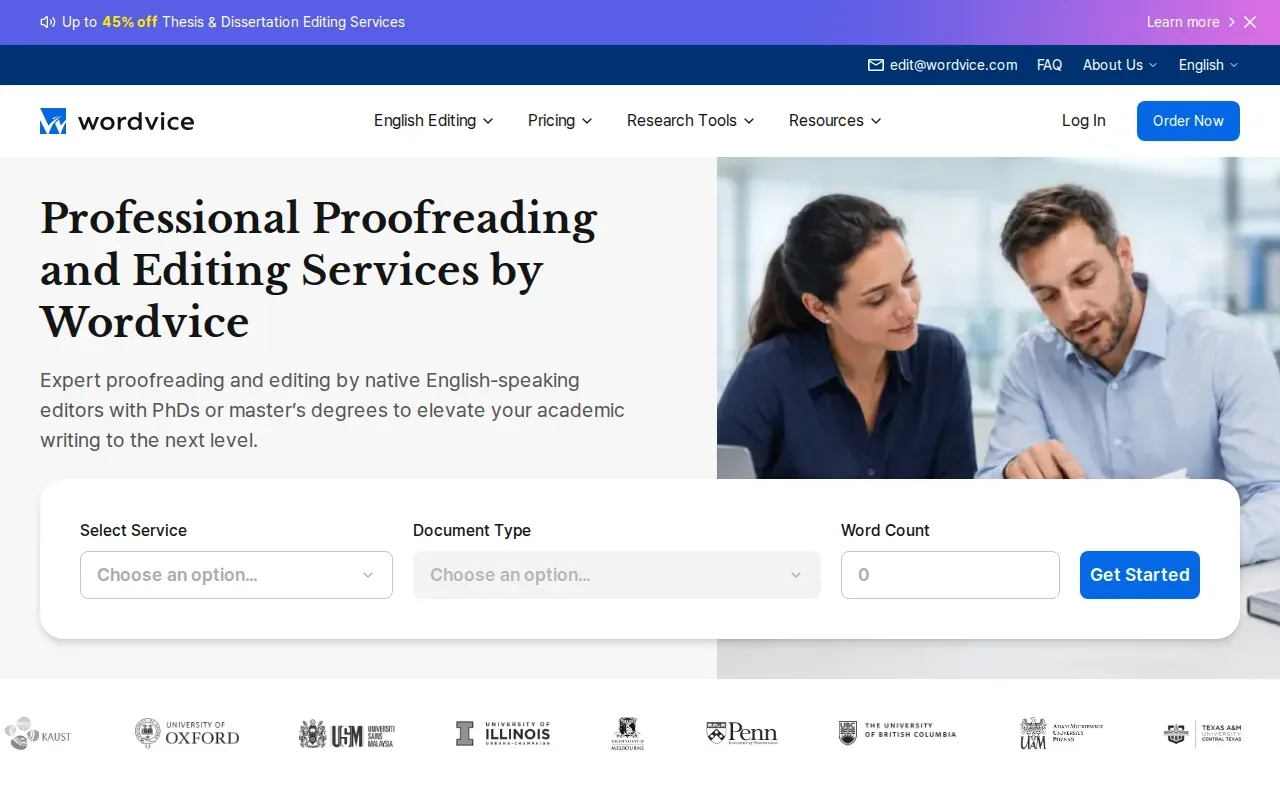
Its assignment editing description covers language, sentence structure, academic tone, and logical flow. It also names common citation styles, including APA, MLA, Harvard, and Chicago. The service says it refines text you’ve written and does not write or create content on your behalf.
Wordvice offers turnaround times ranging from nine hours to seven days. A fast deadline can help when the submission date is close, but allow time to read the edits and make your own choices. Receiving a file quickly is only useful if you have time to review it.
Track Changes makes that review visible. You can accept an edit that fixes an unclear phrase, reject one that shifts your meaning, and use comments to spot questions that still need your judgment. The editor’s work is input; it isn’t a grade or a guarantee of a particular mark.
For students who need research-focused language editing and an editable record of suggestions, Wordvice has a clear workflow. The general definition of proofreading is a useful reminder that proofreading is narrower than broader work on argument and structure.
5. Editor World: Choose an editor for proofreading and editing
Editor World provides native English editing and proofreading. Its listed details let you choose an editor, and the first 300 words are free. It may suit you if you want to select who reviews your document and begin with a short sample.
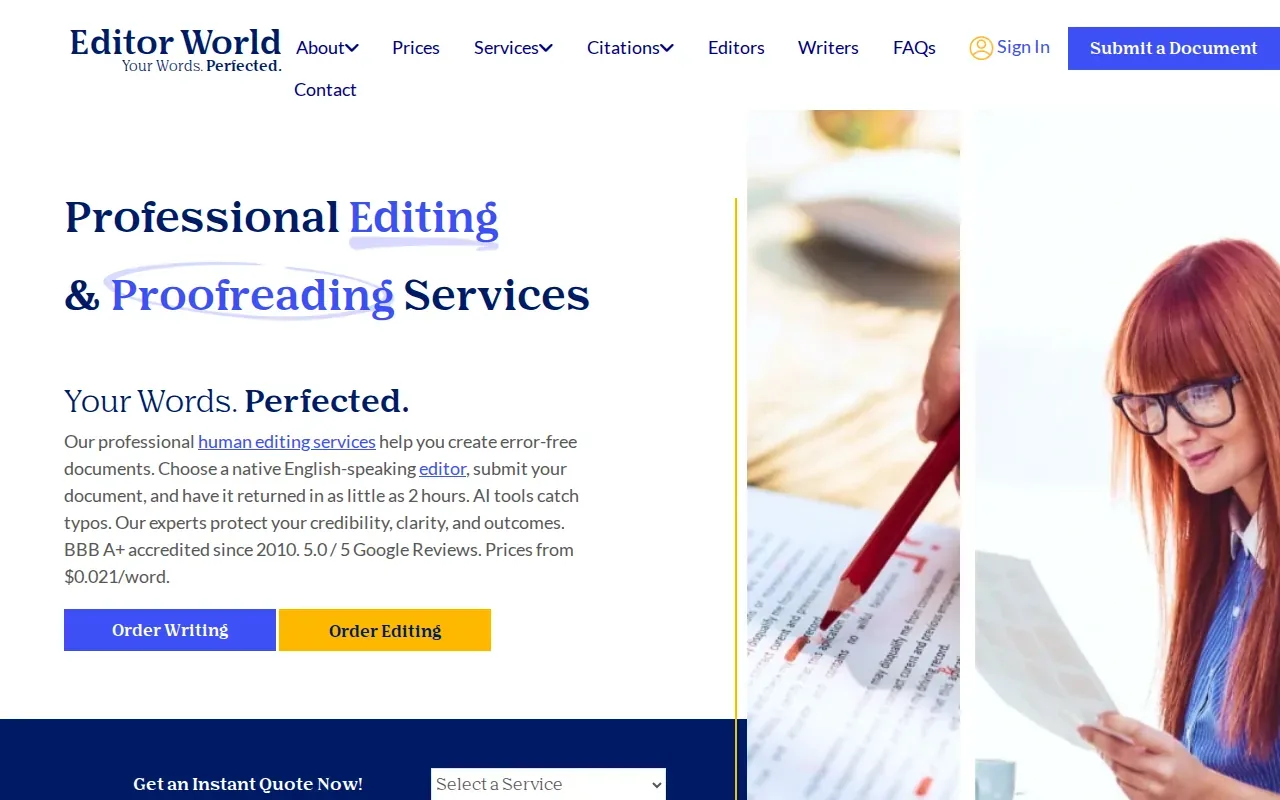
A sample gives you a chance to see how an editor handles your sentences. Check whether the edits keep your meaning, whether comments make sense, and whether the level of change fits your assignment. A light proofread should not reshape an argument; a deeper edit may make more sentence-level suggestions.
Editor World’s listed rates are in a different currency, so compare the final amount in Australian dollars before deciding what fits your budget. Avoid comparing per-word rates alone. The task matters too: a short essay needing typo checks is different from a long draft that needs closer language work.
When you choose an editor, share any relevant style rules and explain what you want reviewed. If the assignment has a rubric, say whether you want comments on clarity or only language. That helps keep the edit within your requested scope.
This is a useful route when editor choice is part of your decision. It’s less suited to treating proofreading as a substitute for reading your own final draft.
6. AJE: English editing and publication support for researchers
AJE provides English editing and publication support for researchers. It states that its service is backed by a 100% satisfaction guarantee and is trusted by more than one million researchers worldwide. It may suit you if you’re preparing research work and want editing linked to publication support.
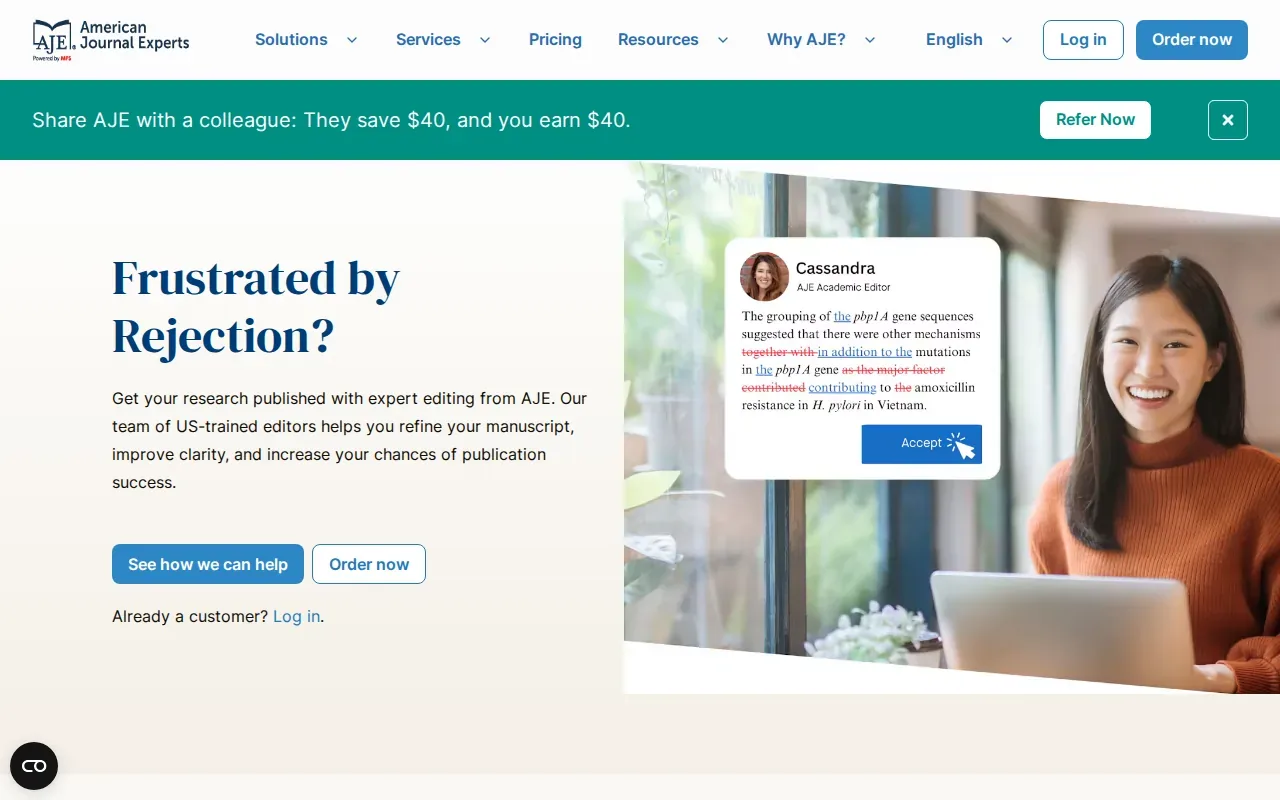
That focus differs from feedback on a course assignment. Before choosing AJE for a class paper, check that the requested service matches your task. For a manuscript, clarify whether you need language editing or publication-related help. For an assignment, first confirm that the scope fits your institution’s rules.
The table below is a quick way to match the named options to the work you have in front of you. It doesn’t rank editorial quality; it uses only the stated service focus to help you narrow your shortlist.
| Service | Stated focus | Useful starting point |
|---|---|---|
| CHETAVON | Student and researcher drafts | Feedback, editing, proofreading, or coaching |
| Grad Coach | Theses and dissertations | Discuss coaching or another named support type |
| Dissertation Editor | Dissertations | Ask about editor or statistician support |
| Wordvice | Assignments and research papers | Review tracked edits in Word |
| Editor World | Editing and proofreading | Use the free sample to assess editing fit |
| AJE | Research editing and publication support | Check fit for your manuscript task |
If your work is a researcher manuscript, AJE’s focus is a close match. If it’s coursework, CHETAVON’s author-led feedback and editing are more directly framed around student work.
FAQ: Best Assignment Feedback Services
What does an assignment feedback service do?
An assignment feedback service reviews work you’ve written and gives comments or edits to guide your revision. The scope can range from proofreading for language errors to feedback on clarity or structure. Before sending a draft, check what the provider will review and what your school permits. You remain responsible for the final work you submit.
Is assignment feedback the same as having someone write my paper?
No. Feedback should help you improve work you authored, while writing a paper for you replaces your own work. Ask the provider to explain its boundaries before you begin. CHETAVON says it does not write assignments, and its feedback is framed as comments and questions rather than a rewrite or a grade.
Which service is best for thesis or dissertation help?
It depends on the kind of support you need. Grad Coach names coaching, editing, transcription, and data coding for thesis and dissertation work. Dissertation Editor names PhD editors and statisticians. If your main need is language editing or feedback on your own draft, compare the exact scope before booking.
How do I choose between proofreading and editing?
Choose proofreading when your draft is close to final and you want help catching surface-level errors. Choose editing when sentences need more work for clarity, flow, or academic tone. If you need comments on your argument or revision plan, ask for feedback or coaching instead. Share a sample paragraph and your assignment brief when asking about scope.
Can I use AI for feedback on an assignment?
You can use AI as a drafting aid, but the quality of its feedback depends on the instructions and rubric you provide. Treat its comments as suggestions, then check them against your course requirements and your sources. A human editor can bring context and ask questions about your draft, but you should still follow your institution’s rules.
Conclusion
For Australian students who want human comments on work they wrote, CHETAVON is the most direct fit in this shortlist. Start by choosing the feedback or editing scope that matches your brief, then review every suggestion before you submit.